Cooperation, trust, and anomaly response for groups of autonomous systems.
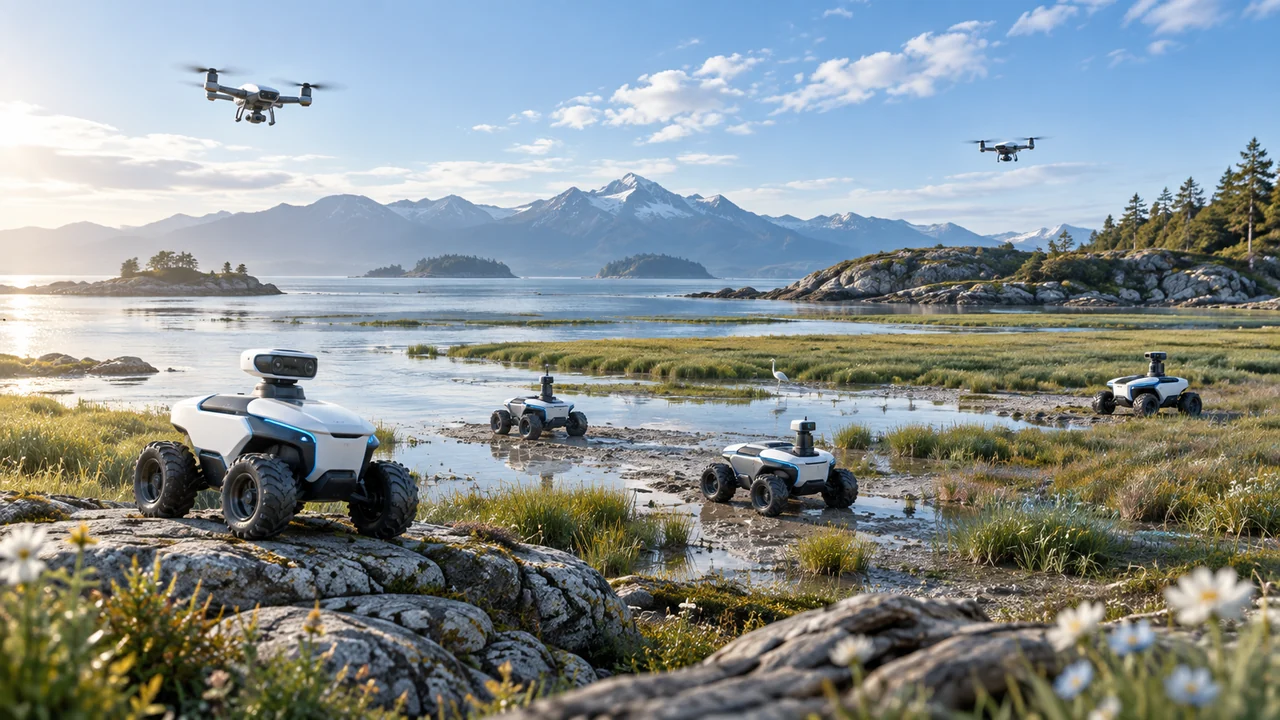
Concept illustration · ground robots and drones in a coastal landscape.
A group has more than one point of failure.
When autonomous units share a task, one unit may act unexpectedly or lose the context needed for cooperation. The group needs a way to question that unit's participation without assuming every member is equally trustworthy.
Trust within coordinated work.
IronSwarm describes a public role for assessing cooperation, responding to anomalies, and separating a questionable unit from shared activity while keeping group decisions open to review.
Where the concept applies
Logistics fleets: ground devices or mixed vehicles coordinate handoffs and routes. Disaster response: separate units share observations and tasks as conditions change. Care and medical support: multiple assistive or delivery devices may need a shared account of which unit can participate. These are conceptual settings, not clinical use claims.
IronSwarm concerns the relationships among autonomous units, whether they move on the ground, through the air, or elsewhere. Robot OS focuses on an individual robot's task context; Mobility OS focuses on travel and control authority.
Development stage. WisdomLink™ is developing patent-pending design IP. The scenarios illustrate intended scope, not deployed operations.